

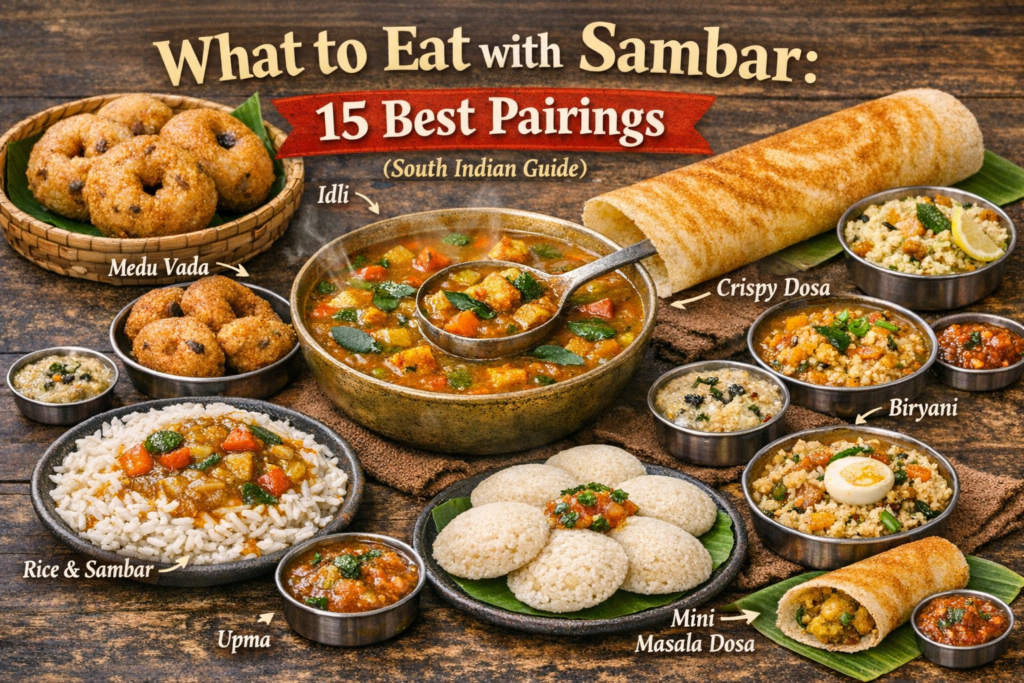
If you have just made a pot of sambar and are wondering what to pair it with — you are in the right place.
Sambar is one of those beautiful dishes that goes with almost everything. It is the backbone of South Indian cooking — a tangy, spiced lentil stew that works as a soup, a sauce, a dip, and even a drink depending on who you ask.
But some combinations are legendary, some are unexpected, and some are strictly regional. In this guide, I break down 15 of the best things to serve with sambar — from the classics every South Indian home makes to some lesser-known pairings that are absolutely worth trying.
First, do not have a sambar recipe yet? Make the Best Sambar from scratch on Brocooked — ready in 30 minutes with step-by-step photos.
The 15 Best Things to Serve with Sambar
1. Soft Idli — The Classic Combination
Idli and sambar is the most iconic South Indian breakfast combination in existence. Soft, pillowy steamed idlis dunked into a hot bowl of tangy sambar — this is the dish that millions of South Indians wake up to every single morning.
The idli soaks up the sambar perfectly, and the slight sourness of the fermented idli balances the tartness of the tamarind in sambar beautifully. This pairing has stood unchanged for generations for a reason — it is simply perfect.
How to serve: Serve 2–3 idlis per person in a plate with a small bowl of sambar alongside. Let people dip or pour the sambar over the idli according to their preference.
Best type of sambar for idli: Udupi-style sambar (thinner, more coconut, slightly sweet) works beautifully with idli.
2. Crispy Dosa
Dosa and sambar is the other half of the great South Indian breakfast duo. The crunch of a well-made dosa against the warmth of sambar is a textural contrast that is deeply satisfying.
Unlike idli, dosa is best eaten with sambar on the side — dip pieces of the dosa into the sambar rather than pouring it over (unless you like soft dosa, in which case pour away).
Best type of sambar for dosa: Drumstick (murungakkai) sambar is the traditional pairing for dosa in Tamil Nadu and Karnataka.
3. Onion Uttapam
Uttapam is thicker than dosa, softer, and topped with onions and chillies. It absorbs sambar wonderfully because of its spongy texture. This combination is a popular choice in Bengaluru darshinis (small local restaurants).
Try the Onion Uttapam recipe from Brocooked — ready in 20 minutes. Serve it alongside a bowl of sambar and coconut chutney for the full darshini experience at home.
4. Sambar Rice — The Comfort Meal
Sambar rice (also called sambar sadam or sambar anna) is sambar and rice mixed together — either stirred into a thick paste consistency or served separately on the same plate. This is the most comforting South Indian lunch you can make.
The best sambar rice uses slightly mushy rice — not al dente — so it blends naturally with the lentil-and-vegetable sambar. A small piece of papad and a dollop of ghee on top completes the dish.
Rice to sambar ratio: 1 cup rice : 1 cup sambar for mixed sambar rice. More sambar if you like it soupy.
Tip: Sambar made with small onions (pearl onions) and drumstick is the best variety for sambar rice — more flavour, better texture.
5. Medu Vada
Vada and sambar is a temple-food classic. Crispy fried urad dal donuts dunked in a hot bowl of sambar until they soften and soak up all that flavour — the combination is legendary. It is served at every South Indian restaurant and every temple meal (prasadam).
Some people eat the vada crispy with sambar on the side. Others go full “sambar vada” — the vada is fully submerged in sambar until it becomes soft. Both versions are delicious.
6. Ven Pongal
Ven Pongal — the creamy ghee-cooked rice and moong dal dish — served with sambar is a quintessential Karnataka and Tamil Nadu breakfast. The richness of ghee-cooked pongal contrasts perfectly with the tangy, spiced sambar.
This combination is very common during festivals, weddings, and temple prasadam. Making it at home on a lazy Sunday morning is a proper treat.
7. Plain White Rice with Ghee
The simplest and perhaps most deeply comforting way to eat sambar: hot plain white rice, a teaspoon of ghee, and a generous ladle of thick sambar poured over it. Nothing else needed.
This is what most South Indian grandmothers will feed you when you are sick, tired, or just need something warm and simple. The ghee adds richness; the sambar provides all the flavour and nutrition you need.
8. Set Dosa
Set dosa (a Bengaluru specialty) is thick, soft, and spongy — served in a “set” of 3. Because of its softer texture compared to regular dosa, it absorbs sambar even more readily. Most Bengaluru hotels serve set dosa with both sambar and a small cup of vegetable sagu on the side.
If you are in Bengaluru and eating set dosa at a darshini, the sambar here tends to be a thinner, slightly sweet version — different from the more intense sambar used in Tamil Nadu. Both are wonderful in their own way.
9. Masala Dosa
Masala dosa might already have a filling, but sambar is still non-negotiable on the side. The potato masala inside is mildly spiced, and the sambar brings the heat and tang that makes masala dosa a complete meal.
At most restaurants, masala dosa is served with 2 chutneys (white coconut and red tomato) and a bowl of sambar. Do not skip the sambar — it is what ties the whole meal together.
10. Poori (Deep Fried Bread)
This is a less common but surprisingly good pairing — hot poori dunked in sambar. While poori is most commonly paired with potato masala or chana curry in North India, in some South Indian homes (especially in Karnataka and Tamil Nadu), sambar-poori is a popular weekend breakfast.
The sambar must be thicker than usual for this pairing — thin sambar and poori do not work well together. Make a slightly thicker, dal-heavier sambar for this combination.
11. Idiyappam (String Hoppers)
Idiyappam — delicate steamed rice noodle circles — and sambar is a popular breakfast combination in Kerala and Tamil Nadu. The fine rice noodles are extremely light and neutral in flavour, making them the perfect vehicle for soaking up sambar.
Idiyappam and sambar is also one of the gentlest breakfast combinations you can eat — ideal for people with digestive issues or those recovering from illness.
12. Akki Roti (Karnataka Rice Flatbread)
Akki roti — the Karnataka-special crispy rice flour flatbread — is usually served with coconut chutney. But a bowl of sambar alongside it is a wonderful pairing that not everyone knows about. Break pieces of the crispy roti and dip them into the sambar for a satisfying breakfast.
This is a combination you are more likely to find in traditional Karnataka homes than in restaurants — which makes it all the more special to try at home.
13. Upma
Upma and sambar is an underrated combination that works incredibly well. The mildly salty, slightly bland semolina upma benefits enormously from the tangy, spiced sambar alongside it. Pour a small amount of sambar over upma or eat them side by side.
Try the Vegetable Upma from Brocooked with a bowl of fresh sambar — simple, nutritious, and ready in 20 minutes total.
14. Curd Rice
Curd rice is a cooling, mild dish — and a small bowl of hot sambar alongside it creates a wonderful hot-cold, tangy-sour contrast. This is typically the end-of-meal combination in many South Indian homes: the meal begins with rice-sambar, and ends with curd rice and a drop of sambar or pickle.
The temperature contrast between hot sambar and cool curd rice is part of what makes South Indian meals so satisfying and balanced.
Full recipe: Best Curd Rice on Brocooked
15. Plain Roti or Chapati
While not a traditional South Indian combination, roti and sambar is a practical everyday choice — especially in homes where both South and North Indian food is cooked regularly. The sambar works as a dal substitute for the roti, and the combination is a complete, nutritious meal with protein, vegetables, and complex carbohydrates.
Use a thicker sambar if serving with roti — thin sambar makes the roti soggy. A tomato-onion based sambar works particularly well with roti.
Which Type of Sambar Works Best with What?
| Sambar Type | Best Paired With |
|---|---|
| Udupi sambar (thin, slightly sweet, coconut-forward) | Idli, soft dosa, uttapam |
| Drumstick (murungakkai) sambar | Dosa, masala dosa, rice |
| Mixed vegetable sambar | Rice, idli, vada, roti |
| Small onion (pearl onion) sambar | Rice, pongal, vada |
| Tomato sambar (quick, no dal) | Idli, upma, poori, roti |
Tips for Serving Sambar
- Always serve sambar hot. Sambar that has cooled down loses a lot of its aroma and flavour. Reheat gently before serving.
- Finish with a fresh tadka. If you made sambar earlier and are reheating it, add a fresh tempering (mustard seeds, curry leaves, dried red chilli in ghee) just before serving — it brings it back to life.
- Adjust consistency for the pairing. Make sambar slightly thicker (less water) when serving with rice or roti, and thinner (more water) when serving with idli or dosa.
- Serve in a separate bowl. Do not pour sambar over idli or dosa at the kitchen — let people pour it themselves so they control how much they want.
- Fresh sambar is best. Sambar always tastes best the day it is made. The next day it is still good, but the tamarind becomes more intense and the vegetables softer. Some people actually prefer day-old sambar — try both and decide for yourself.
Frequently Asked Questions
What is traditionally served with sambar?
Idli, dosa, and rice are the three most traditional and popular pairings for sambar across South India. Medu vada dunked in sambar is also a beloved classic, particularly in temples and South Indian restaurants.
Can sambar be eaten alone as a soup?
Yes! In many South Indian households, sambar is served in a small steel cup and drunk straight at the end of a meal — particularly a thin rasam-style sambar. It is excellent for digestion and very comforting when you are unwell.
How long does sambar stay fresh?
Homemade sambar stays fresh in the refrigerator for 2–3 days. It can also be frozen for up to a month. Always reheat thoroughly and add a fresh tempering of mustard seeds and curry leaves before serving.
What vegetables go in sambar?
The most common vegetables used in sambar are drumstick (moringa), tomato, brinjal (eggplant), pearl onions, carrot, beans, pumpkin, and radish. Drumstick gives sambar its most authentic flavour.
Is sambar healthy?
Very. Sambar is made from toor dal (pigeon pea lentils) which is rich in protein, combined with vegetables and tamarind. It is high in protein, fibre, and several vitamins and minerals, and is naturally low in fat. It is one of the most nutritious South Indian dishes.
Final Thoughts
Sambar is one of the most versatile dishes in Indian cooking. From soft idli to crispy dosa, from plain rice to akki roti — the combinations are endless, and every one of them works because sambar is built to complement everything it touches.
If you have not yet made sambar at home, start with the step-by-step Sambar recipe on Brocooked — it is simpler than it looks and far better than anything you will get from a powder packet.
Which combination is your favourite? Leave a comment below — I would love to know how your family serves sambar!