

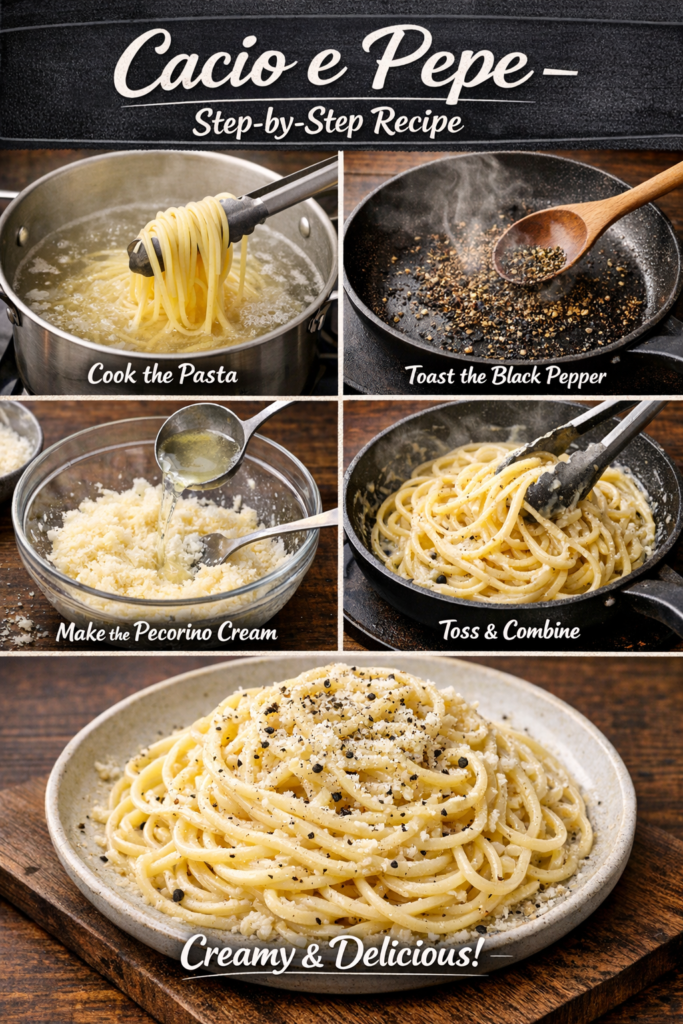
If there’s one pasta dish that proves simple food can be extraordinary, it’s Cacio e Pepe. This Roman classic uses only three basic ingredients — pasta, Pecorino Romano cheese, and black pepper — yet the flavour feels deep, comforting, and beautifully balanced.
The secret lies not in the ingredients, but in the method. With the right technique, you can create a silky, creamy sauce without a single drop of cream.
This guide walks you through a super detailed, easy-to-follow, step-by-step process so even beginners can make restaurant-quality Cacio e Pepe.
⭐ Why This Recipe Is Special
- Uses ingredients already in most kitchens
- Takes only 15 minutes
- Creamy without cream or butter
- Classic Italian comfort food
- Beginner-friendly with detailed steps
- Perfect for quick lunches, date nights, or solo meals
🍝 Ingredients (Serves 2)
Main Ingredients
- 200g spaghetti (or traditional tonnarelli)
- 1 cup freshly grated Pecorino Romano cheese
- 1½ teaspoons freshly crushed black pepper
- A pinch of salt for the pasta water
- Reserved pasta water (starchy and essential)
Tools Recommended
- Large boiling pot
- Deep sauté pan or skillet
- Mixing bowl
- Fine cheese grater
- Tongs
🔪 Step-by-Step Detailed Recipe
Step 1: Prepare the Pasta Water
Before anything else, fill a pot with water and bring it to a boil.
Add only a small pinch of salt — Pecorino is naturally salty, so you don’t want to over-salt the final dish.
Why this matters:
Too much salt will make the dish overwhelmingly salty since pasta water gets added to the sauce.
Step 2: Cook the Pasta
Add the spaghetti into the boiling water. Cook until it is slightly underdone (al dente) — usually one minute less than the package instructions.
Cooking tip:
Don’t drain the water. You’ll need it for the sauce.
Step 3: Toast the Black Pepper
In a dry pan, add the crushed black pepper on low heat.
Toast for about 1 minute until you smell a warm, peppery aroma.
Why toast it?
Toasting opens the oil pockets inside peppercorns, releasing aroma and depth of flavor.
Step 4: Add Pasta Water to the Pan
Scoop a ladle of hot pasta water and pour it into the pan with the toasted pepper.
Let it simmer gently.
It will look like a thin broth — that’s perfect.
Why this step is important:
The starch in pasta water helps emulsify the sauce later.
Step 5: Create the Pecorino Cream
In a mixing bowl, add the grated Pecorino Romano.
Slowly add 2–3 tablespoons of warm (not hot) pasta water.
Mix continuously until it turns into a smooth, thick cream.
Texture check:
- If too thick → add a spoon of water
- If lumpy → water was too hot
- If stringy → cheese was too cold or too aged
This step is the heart of the dish — take your time.
Step 6: Add Pasta to the Pepper Base
Once your pasta is nearly cooked, transfer it directly into the pepper-water pan.
Let the pasta soak up the pepper flavor for about 30 seconds to 1 minute.
Tip:
Move the pasta around so the starch releases into the pan.
Step 7: Turn Off Heat Completely
Before adding the cheese mixture, turn off the stove.
If the pan is too hot, cheese will clump or turn grainy.
Step 8: Stir in the Pecorino Cream
Add the Pecorino cream to the pasta and start tossing immediately.
You can use tongs, a spatula, or simply swirl the pan.
Add small splashes of pasta water until the sauce becomes:
- creamy
- glossy
- smooth
- and evenly coats every strand
This may take 20–30 seconds.
Step 9: Adjust and Serve
Twirl the pasta onto a plate for a restaurant-style look.
Top with:
- extra Pecorino
- extra black pepper
Serve immediately — Cacio e Pepe tastes best when hot and fresh.
🔥 Pro Tips for Perfect Cacio e Pepe
✔ Use Freshly Grated Cheese
Pre-grated cheese contains anti-caking powder and won’t melt smoothly.
✔ Control Heat
Cheese + high heat = clumps
Always mix off the heat.
✔ Add Pasta Water Slowly
Too much water will make it watery; too little will make it thick.
✔ Use Fresh Crushed Pepper
It has better aroma and flavour than packaged pepper powder.
✔ Toss the Pasta
Tossing helps the sauce emulsify and coat every strand.
🧠 Why This Dish Works (Cooking Science Explained Simply)
- Pasta releases starch → starch + water becomes a natural thickener
- Pecorino melts at low temperatures → forms creamy texture
- Pepper’s natural oils blend into the sauce → creates flavor depth
This is why no cream, butter, or oil is needed.
❓ Frequently Asked Questions
Can I use Parmesan instead of Pecorino?
Yes, but the taste will be milder. Pecorino has a sharp, salty flavor.
My sauce turned grainy. What went wrong?
Either the pan was too hot or the cheese mixture was too thick.
Can I make it creamier?
Add a splash more pasta water and toss longer.
Is this recipe good for beginners?
Absolutely — just follow the heat control tips.
❤️ Final Thoughts
Cacio e Pepe is the perfect example of how simple ingredients can create something spectacular. With just cheese, pepper, and pasta, you get a rich, comforting, restaurant-style dish in minutes. Once you master this method, you’ll find yourself making it again and again.