

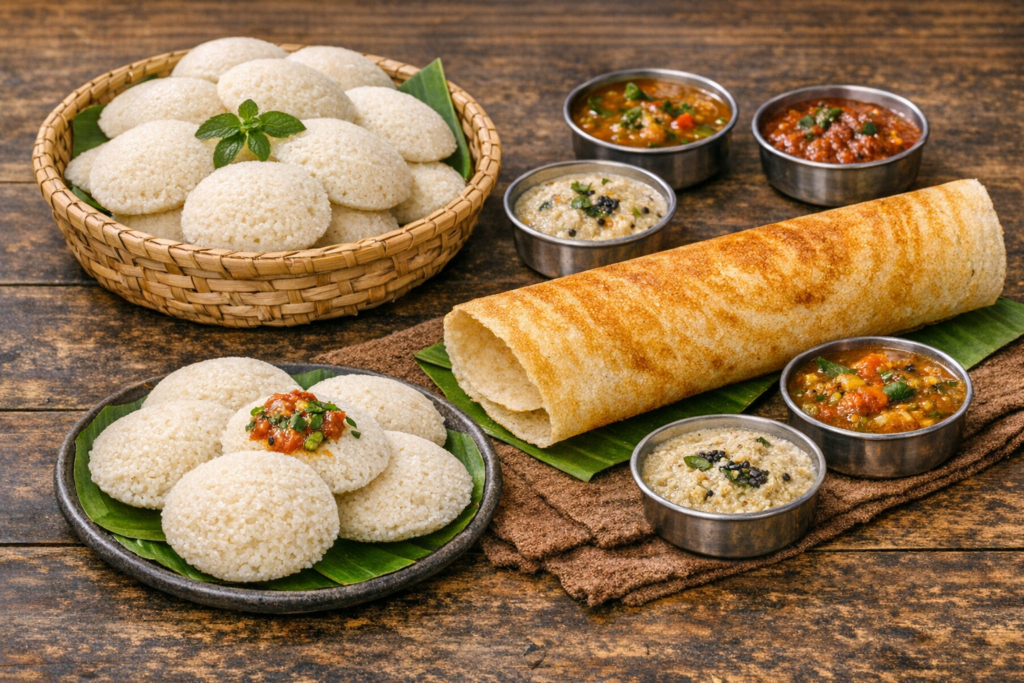
If you have grown up eating South Indian food, you have probably had this debate at your breakfast table at least once.
Idli or dosa — which one should you eat?
Both are made from the same fermented batter. Both are loved across every home in South India. But when it comes to health, calories, and nutrition — they are actually quite different.
In this article, I break down the full comparison: calories, protein, carbs, fat, glycemic index, and which one wins for weight loss, diabetes, and everyday health. By the end, you will know exactly which one to reach for based on your goals.
Quick Answer: Idli vs Dosa at a Glance
| Factor | Idli (per 2 pieces) | Plain Dosa (1 medium) |
|---|---|---|
| Calories | ~130–150 kcal | ~120–160 kcal |
| Protein | ~4–5 g | ~3–4 g |
| Carbohydrates | ~28–30 g | ~25–28 g |
| Fat | ~0.5–1 g | ~3–5 g (depends on oil used) |
| Fiber | ~1 g | ~0.5–1 g |
| Cooking method | Steamed | Pan-fried |
| Oil used | None | 1–2 tsp oil/ghee per dosa |
| Glycemic Index | ~69 (medium) | ~77 (medium-high) |
| Best for weight loss | ✅ Yes | ⚠️ In moderation |
| Best for diabetes | ✅ Better choice | ⚠️ Limit portions |
| Best for kids | ✅ Great option | ✅ Great option |
| Fermented (probiotic) | ✅ Yes | ✅ Yes |
What Are Idli and Dosa Made Of?
Both idli and dosa are made from the same base batter — fermented rice and urad dal (split black lentils). The ratio is typically 3:1 (rice to dal) for dosa and 2:1 for idli (which uses more dal for a softer texture).
The batter is soaked overnight, ground, and left to ferment for 8–12 hours. This fermentation is what makes both dishes naturally probiotic and easier to digest.
The key difference is in how they are cooked:
- Idli is steamed in a mould — no oil is used at all during cooking.
- Dosa is spread on a hot tawa and pan-fried with oil or ghee — which adds fat and calories.
This one difference — steaming vs frying — is what makes idli the leaner option from a pure calorie standpoint.
Idli Nutrition: Full Breakdown
Serving size: 2 medium idlis (approximately 100g)
- Calories: 130–150 kcal
- Protein: 4–5 g
- Carbohydrates: 28–30 g
- Fat: 0.5–1 g
- Fiber: 1–1.5 g
- Sodium: ~200 mg
Idli is one of the lowest-fat breakfast options you can find in Indian cuisine. Because it is steamed, it retains moisture without needing any oil. The protein from urad dal makes it reasonably filling for its calorie count.
What makes idli particularly healthy:
- Zero oil in cooking
- Fermentation increases bioavailability of B vitamins and iron
- Easy on the digestive system — ideal for people with acid reflux or sensitive stomachs
- Gluten-free naturally
- Good for all age groups — babies, kids, elderly, and those recovering from illness
Dosa Nutrition: Full Breakdown
Serving size: 1 medium plain dosa (approximately 80–90g before filling)
- Calories: 120–160 kcal (varies with oil used)
- Protein: 3–4 g
- Carbohydrates: 25–28 g
- Fat: 3–5 g
- Fiber: 0.5–1 g
- Sodium: ~150 mg
Plain dosa by itself is not unhealthy — it is relatively light. But the fat content depends heavily on how much oil or ghee you use while cooking. A dosa made with a generous pour of oil can easily hit 200+ kcal, while a dosa made on a lightly oiled non-stick tawa stays under 140 kcal.
What makes dosa a good option:
- Crispy texture makes it more satisfying — you tend to eat less
- Also fermented, so probiotic benefits apply
- Higher iron content compared to idli (less water-washing of batter)
- Can be made oil-free on a good non-stick pan
Glycemic Index: Which Spikes Blood Sugar Less?
The glycemic index (GI) measures how quickly a food raises your blood sugar after eating. Lower is better, especially for people managing weight or diabetes.
- Idli GI: approximately 65–69 (medium range)
- Dosa GI: approximately 74–77 (medium to high range)
Idli has a slightly lower glycemic index than dosa, primarily because the steaming process preserves more of the resistant starch in rice. The thinner, crispier texture of dosa means the starch is more accessible and digested faster.
Bottom line on GI: Neither idli nor dosa is a low-GI food — but idli is the better choice for those watching blood sugar. Pairing either with high-fibre sambar or coconut chutney lowers the overall GI of the meal significantly.
Idli vs Dosa for Weight Loss
If your goal is weight loss, idli is the clear winner.
Here is why:
- Idli is steamed — zero cooking fat
- Lower calorie count per serving
- Lower glycemic index = less blood sugar spike = less fat storage hormonal response
- The soft texture means you chew more slowly — research suggests this leads to better satiety
A breakfast of 3 idlis with sambar is approximately 220–250 kcal — an excellent, filling, low-calorie meal.
However, dosa is not off the table for weight loss either. A single plain dosa made with minimal oil, eaten with sambar (skip high-fat chutneys), is a perfectly reasonable weight-loss breakfast around 150–170 kcal.
Want to know how many calories you should be eating per day for your weight loss goal? Use the free Brocooked Fitness Calculator to calculate your daily calorie target based on your age, weight, and activity level.
Idli vs Dosa for Diabetes
For people with Type 2 diabetes or insulin resistance, blood sugar management is the priority — and again, idli comes out ahead.
Key reasons:
- Lower glycemic index compared to dosa
- Steamed = no added fat that can worsen insulin resistance over time
- The fermentation process produces organic acids that may slow glucose absorption
Best practices for diabetics eating idli or dosa:
- Always pair with a protein/fat source — sambar, dal, or a small amount of coconut chutney
- Eat ragi (finger millet) idli or ragi dosa for an even lower GI option
- Avoid masala dosa or butter dosa if managing blood sugar closely
- Limit portion size — 2 idlis or 1 dosa is a reasonable serving
Idli vs Dosa for Kids
Both are excellent for children — nutritious, easy to eat, and universally loved. But for very young children (1–3 years), idli is safer:
- Soft texture — no choking risk
- No oil — gentle on a developing digestive system
- Easy to mash into sambar for a complete baby meal
For older kids and teenagers, dosa is a great high-energy breakfast before school — the slightly higher fat content gives sustained energy through the morning.
What About Masala Dosa?
Masala dosa adds a whole new layer of calories. The potato filling typically adds 80–120 kcal plus the ghee or oil used for both the dosa and the masala. A full restaurant masala dosa can be 350–450 kcal — perfectly fine as an occasional treat, but not ideal as a daily weight-loss breakfast.
The Winner: Idli or Dosa?
Here is the honest verdict:
- For weight loss: Idli wins clearly
- For diabetes management: Idli wins
- For taste and variety: Dosa wins
- For a satisfying weekend breakfast: Dosa wins
- For babies and toddlers: Idli wins
- For overall nutrition: It is a tie — both are healthy choices
The truth is, you do not have to choose just one. Eat idli on weekdays when you want a light, healthy start. Save masala dosa or ghee dosa for a satisfying weekend breakfast. Both have a place in a balanced Indian diet.
How to Make Both Even Healthier
- Switch to brown rice batter — increases fiber and lowers GI for both
- Add ragi (finger millet) flour to the batter — boosts calcium and lowers glycemic response
- Use a good non-stick tawa — you can make dosa with half a teaspoon of oil instead of a full teaspoon
- Pair with sambar over coconut chutney — sambar has more protein and fiber; coconut chutney has more fat
- Add vegetables to the batter — grated carrots, spinach, or methi (fenugreek leaves) increase the nutritional value significantly
Frequently Asked Questions
Is idli good for weight loss?
Yes. Idli is one of the best weight-loss breakfast options in Indian cuisine. It is steamed, oil-free, relatively low in calories (130–150 kcal for 2 idlis), and easy to digest. Pair it with sambar for a complete, protein-balanced meal.
How many calories are in 2 idlis?
Two medium idlis have approximately 130–150 kcal. The calorie count can be slightly higher if the batter uses more urad dal or if the idlis are larger than average.
Is dosa healthy?
Plain dosa is reasonably healthy — fermented, naturally gluten-free, and moderate in calories. The healthiness depends on how much oil you use during cooking. A lightly oiled dosa is a good breakfast option. Avoid butter dosa and heavy ghee dosa if you are watching calories.
Which is better for digestion — idli or dosa?
Both are fermented and easy to digest. However, idli is generally considered gentler on the stomach because it is steamed rather than fried. People with acidity, IBS, or sensitive digestion usually tolerate idli better than dosa.
Can I eat idli or dosa every day?
Absolutely. Idli and dosa are traditional everyday breakfast foods for millions of South Indians. They are nutritionally balanced when paired with sambar and chutney, and suitable for daily consumption as part of a varied diet.
Final Thoughts
The idli vs dosa debate does not have a single right answer — it depends on your health goals, your lifestyle, and honestly, what your mood is that morning.
What I can tell you is that both idli and dosa, made at home with good ingredients and sensible portions, are among the healthiest breakfasts you will find anywhere in the world. They are fermented, naturally gluten-free, plant-based, and deeply nourishing.
So instead of choosing one over the other — eat both, enjoy both, and use the Brocooked Fitness Calculator to make sure your breakfast portions fit your daily calorie goal.
Did this help? Share it with a fellow idli-dosa debater! 😄