

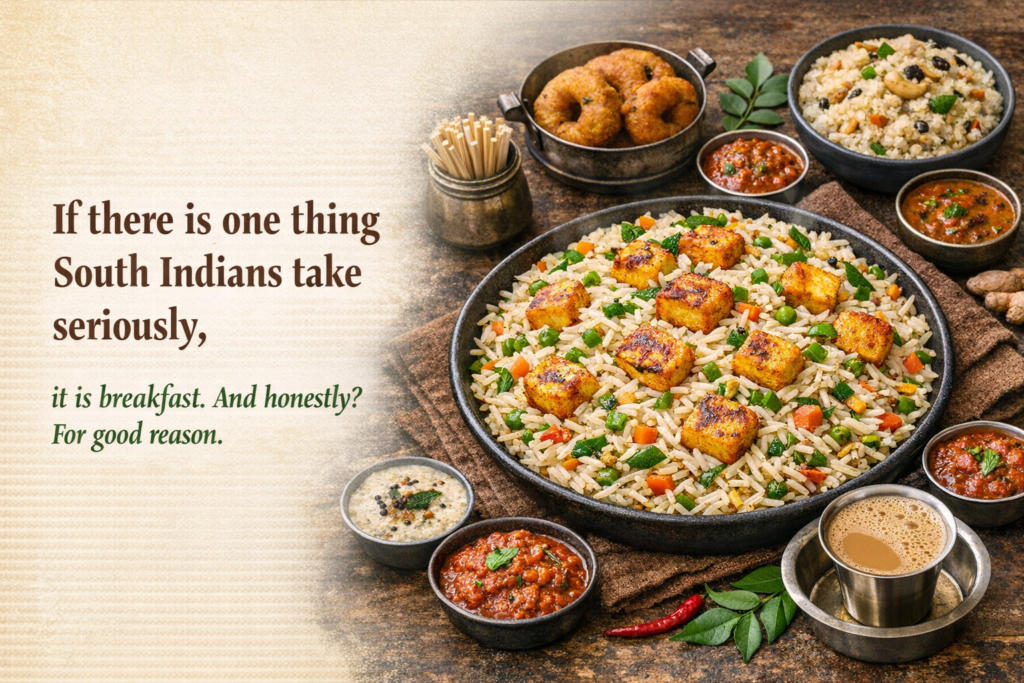
A proper South Indian breakfast is not just food — it is a ritual. The smell of fresh filter coffee, the sizzle of dosa on a hot tawa, the warmth of sambar in a small steel cup. It is comfort, tradition, and nutrition all on one plate.
In this complete guide, I have put together 20 of the best South Indian breakfast recipes — from the classics every household makes to some lesser-known gems worth trying. Whether you are a beginner or a seasoned home cook, you will find something here to make tomorrow morning special.
Every recipe below has a full step-by-step post on Brocooked — so you will never be stuck without instructions.
Jump to a Recipe
- Soft Idli
- Crispy Plain Dosa
- Onion Uttapam
- Vegetable Upma
- Curd Rice
- Sambar
- Tomato Rasam
- Poha
- Rava Idli
- Set Dosa
- Ven Pongal
- Akki Roti
- Pesarattu
- Medu Vada
- Rava Sheera / Kesari Bath
- Bread Upma
- Sabudana Khichdi
- Vermicelli Upma / Semiya Upma
- Egg Dosa
- Masala Dosa
Why South Indian Breakfasts Are So Healthy
Before we get to the recipes, let us talk about why these breakfasts have stood the test of time — not just in taste, but in nutrition.
Most South Indian breakfast dishes are made from rice, lentils, or semolina — all naturally light, easy to digest, and filling without making you feel heavy. Many are fermented (like idli and dosa batter), which means they are rich in probiotics and great for gut health.
They are also largely vegetarian and low in fat, which makes them ideal for anyone watching their weight or calorie intake. Want to know exactly how many calories are in your breakfast? Try the free Brocooked Fitness Calculator to check your daily calorie needs.
1. Soft Idli
Time: 20 minutes (+ overnight fermentation) | Difficulty: Easy
Idli is the queen of South Indian breakfasts. Soft, pillowy, steamed rice cakes that melt in your mouth — served with sambar and coconut chutney. The batter needs to ferment overnight, but once that is done, making idlis is one of the easiest things in the kitchen.
What you need: Idli rice, urad dal, salt, water. That is genuinely it.
Tip: The secret to soft idli is the batter consistency — it should be thick like a pancake batter, not runny. And always use a well-seasoned idli mould.
Calories per 2 idlis: approximately 130–150 kcal
2. Crispy Plain Dosa
Time: 15 minutes (+ overnight fermentation) | Difficulty: Easy–Medium
Made from the same batter as idli but spread thin on a hot tawa — dosa is crispy, golden, and completely addictive. The key is a well-seasoned cast iron or non-stick tawa and the right heat.
Tip: Always let the tawa heat up fully before pouring the batter. Spread in circular motions from the centre outward. Drizzle a little oil or ghee around the edges for that perfect crisp.
Serves best with: Coconut chutney, sambar, tomato chutney
3. Onion Uttapam
Time: 20 minutes | Difficulty: Easy
Uttapam is the thick, soft cousin of dosa — topped with onions, green chillies, and coriander right on the tawa. It is crispy on the outside and spongy inside. Great for using up slightly over-fermented dosa batter.
Check out the full Onion Uttapam recipe on Brocooked — ready in 20 minutes with step-by-step photos.
Tip: Press the toppings gently into the batter right after pouring so they stick. Use a medium flame — too high and the bottom burns before the top cooks.
4. Vegetable Upma
Time: 15 minutes | Difficulty: Easy
Upma is the weekday hero of South Indian kitchens. Made from roasted semolina (rava) tempered with mustard seeds, curry leaves, onion, and vegetables — it is quick, filling, and endlessly customisable.
Read the full Vegetable Upma recipe here — fluffy, perfectly cooked upma in 15 minutes flat.
Tip: Always dry roast the rava before cooking — this prevents lumps and gives the upma a light, fluffy texture. The water-to-rava ratio should be 2:1.
Calories: approximately 200–220 kcal per serving
5. Curd Rice
Time: 10 minutes | Difficulty: Very Easy
Curd rice is technically a meal, but many South Indian households eat it as a light breakfast or finish breakfast with a small bowl of it. It is cooling, probiotic-rich, and takes under 10 minutes to make.
Get the full Curd Rice recipe on Brocooked — the most refreshing 10-minute meal you will make.
Tip: Use slightly warm rice so the curd mixes smoothly. Add the tempering of mustard seeds, dry red chilli, and curry leaves just before serving for maximum flavour.
6. Sambar
Time: 30 minutes | Difficulty: Easy
No South Indian breakfast table is complete without sambar. This lentil-based vegetable stew, tangy with tamarind and aromatic with fresh sambar powder, is the soul of the cuisine.
Try the Best Sambar Recipe on Brocooked — made from scratch in 30 minutes, perfect for idli, dosa, and rice.
Tip: Always add tamarind extract after the dal is fully cooked. Adding it too early makes the dal tough and slow to cook. Finish with a generous tempering of ghee, mustard seeds, and dried red chilli.
7. Tomato Rasam
Time: 15 minutes | Difficulty: Easy
Rasam is the lighter, thinner sibling of sambar — spicy, tangy, and incredibly soothing. It is often drunk straight from a cup or poured over rice. On a rainy Bangalore morning, there is nothing better.
Full recipe: Tomato Rasam Recipe on Brocooked — simple and ready in 15 minutes.
Tip: The key to great rasam is the tempering — heat ghee until smoking, add mustard seeds, let them pop, then pour over the rasam at the very end. This final “tadka” is what makes it aromatic.
8. Poha (Flattened Rice)
Time: 15 minutes | Difficulty: Very Easy
Poha is made from flattened rice and is one of the most popular breakfasts across South and Central India. Light, mildly spiced, and topped with fresh coriander and a squeeze of lemon — it is ready in 15 minutes and keeps you full until lunch.
What you need: Thick poha, onion, mustard seeds, turmeric, green chilli, curry leaves, lemon, peanuts (optional).
Tip: Rinse the poha gently under cold water and let it drain for 5 minutes before cooking. It should be soft but not mushy. Over-soaking makes it sticky.
9. Rava Idli (Instant Idli)
Time: 25 minutes (no fermentation needed) | Difficulty: Easy
No time to soak and ferment? Rava idli is your answer. Made with semolina, curd, and a handful of spices — no overnight prep needed. It is a Bengaluru restaurant classic, made famous by the legendary MTR.
Tip: Add a pinch of baking soda right before steaming — this is what makes rava idli light and fluffy. Do not skip it.
Best served with: Coconut chutney and vegetable sagu
10. Set Dosa
Time: 20 minutes | Difficulty: Easy
Set dosa is the soft, thick, spongy dosa variety you get at most Bangalore hotels and darshinis. Served in a “set” of 2 or 3, with coconut chutney and a small bowl of sagu or sambar on the side. The batter is slightly different — fermented with a small amount of poha for that signature softness.
Tip: Use a thicker batter than regular dosa, and cook on a lower flame. You do not need to spread it thin — just pour and let it spread naturally into a small round.
11. Ven Pongal
Time: 30 minutes | Difficulty: Easy
Ven Pongal is a creamy, comforting rice-and-lentil dish cooked with generous amounts of ghee, black pepper, ginger, and cumin. It is the breakfast equivalent of a warm hug — filling, flavourful, and deeply traditional.
Tip: Do not skimp on the ghee. Pongal needs fat to taste right — this is not the dish to make low-calorie. Cook the rice and moong dal together until completely soft and mushy. The texture should be thick and porridge-like.
Best served with: Coconut chutney, sambar, and a side of vada
12. Akki Roti (Rice Flour Flatbread)
Time: 25 minutes | Difficulty: Medium
Akki Roti is a uniquely Karnataka breakfast — a thick flatbread made from rice flour, onion, green chilli, grated coconut, and fresh coriander. It is crispy on the outside, soft inside, and completely gluten-free.
Tip: Wet your hands and the banana leaf or parchment paper before pressing the dough — this prevents sticking. Cook on a medium flame with a little oil until both sides are golden brown.
Best paired with: Coconut chutney or groundnut chutney
13. Pesarattu (Green Moong Dosa)
Time: 20 minutes (+ 4 hours soaking) | Difficulty: Easy
Pesarattu is a protein-rich dosa made from soaked whole green moong dal — no rice needed. It is crispy, nutritious, and one of the healthiest breakfast options in South Indian cuisine. Popular in Andhra Pradesh, but loved across South India.
Tip: Soak the moong dal for at least 4 hours. Grind with ginger, green chilli, and a pinch of cumin for the best flavour. No fermentation needed — just blend and cook.
Calories: approximately 120 kcal per dosa — one of the lowest-calorie, highest-protein breakfasts on this list.
14. Medu Vada
Time: 30 minutes | Difficulty: Medium
Crispy on the outside, soft and airy inside — medu vada is the donut-shaped fried snack made from urad dal batter. Paired with sambar and coconut chutney, it is the most satisfying weekend breakfast you can make.
Tip: The batter must be whipped until very fluffy — this air is what makes the vada light inside. The easiest way to shape them: wet your hands, take a ball of batter, flatten it, poke a hole in the centre, and slide it gently into hot oil.
15. Rava Sheera / Kesari Bath
Time: 20 minutes | Difficulty: Easy
Rava Sheera (or Kesari Bath in Kannada) is a sweet semolina pudding made with ghee, sugar, cardamom, and saffron — golden yellow, fragrant, and utterly delicious. In many Karnataka homes, it is served alongside khara (savoury) upma as a combo called “chow-chow bath.”
Tip: Roast the rava in plenty of ghee before adding water — this prevents lumps and gives it a rich, nutty flavour. Add cashews and raisins fried in ghee for texture.
16. Bread Upma
Time: 10 minutes | Difficulty: Very Easy
Got leftover bread? Bread upma is the fastest South Indian breakfast you can make. Cubed bread tossed in a spicy tempering of mustard seeds, onion, tomato, and curry leaves — ready in 10 minutes, and honestly better than it sounds.
Tip: Use slightly stale bread — fresh bread becomes too soft. Cut into cubes, add at the very end, and toss quickly. Do not over-mix or it turns mushy.
17. Sabudana Khichdi
Time: 20 minutes (+ soaking overnight) | Difficulty: Easy
Sabudana Khichdi is made from tapioca pearls (sago) and is a popular fasting food — but it is also a delicious everyday breakfast. Light, slightly chewy, mildly spiced with green chilli and cumin, finished with crushed peanuts and lemon.
Tip: Soak sabudana overnight in just enough water to cover it. Drain well the next morning. Wet sabudana sticks together — spread the soaked pearls on a cloth for 10 minutes before cooking.
18. Semiya Upma (Vermicelli Upma)
Time: 15 minutes | Difficulty: Easy
Semiya Upma is made from thin vermicelli noodles roasted and cooked with a classic South Indian tempering. It is lighter than rava upma, has a lovely texture, and is a great option for kids and adults alike.
Tip: Always dry roast the vermicelli until golden before cooking — this keeps it from turning sticky. Add vegetables like peas, carrot, and beans for a more nutritious version.
19. Egg Dosa
Time: 15 minutes | Difficulty: Easy
Egg dosa is what happens when a regular dosa gets a protein upgrade. Pour the dosa batter, crack an egg right on top, season with salt, pepper, and green chilli, fold it over — and you have a complete breakfast in one. A staple at Bengaluru street-side darshinis.
Tip: Break the yolk and spread the egg gently over the dosa before folding. Cook on a low flame after cracking the egg so the egg cooks through without burning the dosa.
20. Masala Dosa
Time: 30 minutes | Difficulty: Medium
The king of all dosas — a crispy golden dosa filled with spiced potato masala, served with sambar and two chutneys. It is the dish that put South Indian food on the global map, and for good reason. Making it at home is a weekend project well worth the effort.
For the masala filling: Boiled potatoes, onion, green chilli, turmeric, mustard seeds, curry leaves, a pinch of sugar. Simple, but deeply satisfying.
Tip: The dosa batter should be slightly more watery than regular dosa batter for that extra crispiness. Spread it very thin on a very hot tawa and cook on one side only — do not flip masala dosa.
Tips for Making South Indian Breakfasts at Home
After years of making these dishes in a home kitchen in Bangalore, here are the tips that make the biggest difference:
- Invest in a good tawa. A heavy cast iron or thick non-stick tawa is the single most important tool for dosa, uttapam, and akki roti.
- Make batter in bulk. Idli/dosa batter keeps well in the fridge for 4–5 days. Make a large batch on Sunday and use it all week.
- Keep a tempering box ready. Mustard seeds, chana dal, urad dal, curry leaves, and dried red chillies — these are the building blocks of almost every dish on this list.
- Do not rush fermentation. In colder weather, keep the batter in a warm oven with just the light on overnight. Good fermentation = soft idlis and tasty dosa.
- Track your calories. South Indian breakfasts are generally healthy, but portions matter. Use the free Brocooked Fitness Calculator to understand how these meals fit into your daily calorie goals.
Frequently Asked Questions
What is the healthiest South Indian breakfast?
Pesarattu (green moong dosa) and idli are the healthiest options — both are steamed or made with minimal oil, high in protein, and easy to digest. Pair either with sambar for a complete, balanced meal.
Can I make South Indian breakfast without fermentation?
Yes! Rava idli, upma, poha, bread upma, and semiya upma all require zero fermentation. These are the best options when you want South Indian breakfast quickly.
What chutney goes with South Indian breakfast?
Coconut chutney is the universal pairing for almost all South Indian breakfast dishes. Tomato chutney and groundnut chutney are also popular. Sambar doubles as both a soup and a dipping sauce.
Is South Indian breakfast good for weight loss?
Most South Indian breakfasts are naturally low in fat and calories, making them excellent for weight management. Stick to steamed options like idli and pair them with sambar rather than fried chutneys. Use the Fitness Calculator to plan your meal portions.
What is the most popular South Indian breakfast?
Idli-sambar and masala dosa are the two most iconic South Indian breakfasts. In Bengaluru specifically, set dosa and rava idli are also extremely popular.
Final Thoughts
South Indian breakfast is one of the most varied, nutritious, and delicious morning food traditions in the world. Whether you are making a quick bowl of upma on a busy weekday or spending Sunday morning perfecting your masala dosa — there is always something on this list for every mood, skill level, and schedule.
Bookmark this page, pick one recipe to try this week, and work your way through the list. Your mornings will never be boring again.
Have a favourite South Indian breakfast that is not on this list? Drop it in the comments — I would love to hear about it!