What is DSP in Audio Visual Systems?
Your Beginner-Friendly Guide to Digital Signal Processing (DSP) in Professional AV Systems
Introduction
In modern Audio Visual (AV) environments, clear audio is just as important as high-quality video.
Whether it’s a conference room, classroom, auditorium, boardroom, or hybrid workspace, audio signals must be processed, optimized, and distributed efficiently to deliver an exceptional user experience.
This is where Digital Signal Processing (DSP) plays a critical role.
A DSP acts as the brain of an audio system, managing microphones, speakers, audio routing, noise reduction, echo cancellation, and much more to ensure crystal-clear communication.
What is DSP?
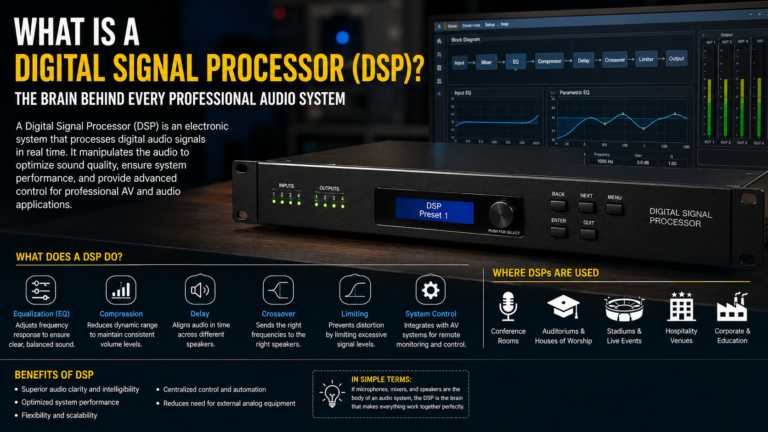
DSP (Digital Signal Processor) is a specialized hardware device or software platform that processes audio signals digitally to improve sound quality, control audio flow, and optimize overall system performance.
Simple Audio Path
🎤 Microphones → DSP → Amplifier → Speakers
The DSP receives audio signals, processes them based on predefined logic, and sends optimized audio to the appropriate destinations.
Why is DSP Important in AV Systems?
Without DSP
❌ Echo during meetings
❌ Feedback (howling noise)
❌ Uneven volume levels
❌ Poor speech intelligibility
❌ Limited audio routing flexibility
With DSP
✅ Crystal-clear speech
✅ Echo-free conferencing
✅ Automatic audio optimization
✅ Improved room acoustics
✅ Flexible audio routing
Key Functions of a DSP
1. Acoustic Echo Cancellation (AEC)
AEC removes echo caused when audio from room speakers is picked up by microphones and transmitted back into the meeting.
Common Applications
- Microsoft Teams Rooms
- Zoom Rooms
- Boardrooms
- Hybrid Meeting Spaces
Benefit: Clear conversations without hearing your own voice echoed back.
2. Noise Suppression
Noise suppression filters out unwanted background sounds, including:
- Air conditioning noise
- Keyboard typing
- Fan noise
- Projector noise
- Outdoor traffic sounds
Benefit: Cleaner and more professional audio quality.
3. Equalization (EQ)
Equalization adjusts specific audio frequencies to improve clarity and tonal balance.
Examples
- Boost speech frequencies
- Reduce harsh frequencies
- Improve microphone intelligibility
Benefit: Better speech clarity and listening experience.
4. Automatic Gain Control (AGC)
AGC automatically adjusts microphone levels based on how loudly or softly participants speak.
📈 Soft speaker → Gain increases
📉 Loud speaker → Gain decreases
Benefit: Consistent audio levels throughout meetings.
5. Audio Mixing
Audio mixing combines multiple audio sources into a single output stream.
Common Sources
- Wireless microphones
- Ceiling microphones
- Laptop audio
- Video conferencing audio
Benefit: Seamless audio management across the entire system.
6. Audio Routing
Audio routing directs signals to the required destinations.
| Source | Destination |
|---|---|
| Ceiling Microphone | Teams Call |
| Laptop Audio | Room Speakers |
| Wireless Microphone | Recording System |
Benefit: Flexible and scalable AV system design.
7. Feedback Suppression
Feedback suppression eliminates the high-pitched squealing sound caused by microphone feedback loops.
Benefit: Stable and reliable audio performance.
Typical DSP Signal Flow
Microphones
      ↓
      DSP
      ↓
 ┌───────────────┐
 │ AEC           │
 │ Noise Filter  │
 │ EQ            │
 │ AGC           │
 │ Mixing        │
 │ Routing       │
 └───────────────┘
      ↓
Amplifier
      ↓
Speakers
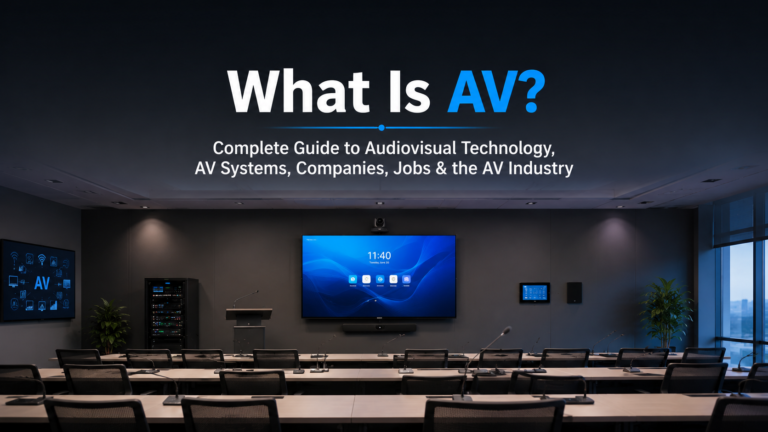
DSP in a Conference Room
Typical Components
- Ceiling Microphones
- DSP Processor
- Amplifier
- Ceiling Speakers
- Microsoft Teams Room System
Workflow
- User speaks into the microphone.
- DSP removes noise and echo.
- DSP adjusts audio levels automatically.
- Processed audio is sent to the Teams call.
- Far-end audio is received.
- DSP prevents echo from returning to the call.
- Audio is played through room speakers.
Result: A natural and professional meeting experience.
Popular DSP Platforms in the AV Industry
🎛️ Biamp Tesira
Best For:
- Corporate Offices
- Universities
- Government Facilities
Key Features:
- Advanced AEC
- Dante Integration
- Scalable Architecture
🎛️ Q-SYS Core
Best For:
- Enterprise AV
- Large Meeting Rooms
- Control Integration
Key Features:
- Audio + Video + Control Platform
- Network-Based Architecture
- Cloud Monitoring
🎛️ Shure IntelliMix DSP
Best For:
- Conference Rooms
- Teams Rooms
- Zoom Rooms
Key Features:
- AI Noise Reduction
- Advanced Microphone Processing
- Easy Deployment
🎛️ Symetrix DSP
Best For:
- Education
- Hospitality
- Auditoriums
Key Features:
- Flexible Audio Processing
- Cost-Effective Deployment
DSP and Dante Integration
Modern DSPs often support Dante Audio Networking, enabling audio transmission over standard IP networks.
Benefits
✅ Audio over IP (AoIP)
✅ Reduced Cabling
✅ Easy Scalability
✅ Centralized Management
✅ High-Quality Digital Audio
Common AV Applications
Corporate Boardrooms
- Video Conferencing
- Wireless Microphones
- Speech Reinforcement
Training Rooms
- Instructor Microphones
- Room Speakers
- Lecture Recording
Auditoriums
- Multiple Microphones
- Audio Mixing
- Distributed Speaker Systems
Hybrid Meeting Spaces
- Teams Rooms
- Zoom Rooms
- BYOD Environments
Best Practices for DSP Deployment
✔ Enable AEC for conferencing spaces
✔ Use proper microphone placement
✔ Optimize gain structure
✔ Configure EQ carefully
✔ Validate Dante clock synchronization
✔ Test all audio routes before handover
✔ Maintain DSP documentation
Common DSP Mistakes
❌ Excessive microphone gain
❌ Incorrect AEC configuration
❌ Poor audio routing design
❌ Ignoring room acoustics
❌ Over-processing audio signals
❌ Lack of documentation
Conclusion
A DSP is one of the most important components in any professional AV system. It ensures audio remains clear, balanced, and optimized by handling echo cancellation, noise suppression, audio mixing, routing, and gain control.
Whether you’re designing a boardroom, classroom, auditorium, or hybrid meeting room, a properly configured DSP can dramatically improve the user experience and overall system performance.
In simple terms: A DSP is the intelligence behind great audio, transforming raw sound into clear, professional communication.
Key Takeaways
📌 DSP stands for Digital Signal Processing
📌 Acts as the brain of an AV audio system
📌 Performs AEC, EQ, AGC, Mixing, and Routing
📌 Essential for Teams Rooms and Zoom Rooms
📌 Integrates seamlessly with Dante networks
📌 Forms the foundation of modern professional AV systems
Tags: #AVTechnology #DSP #ProAV #AudioEngineering #TeamsRooms #ZoomRooms #DanteAudio #Biamp #QSYS #Shure #AVOverIP